

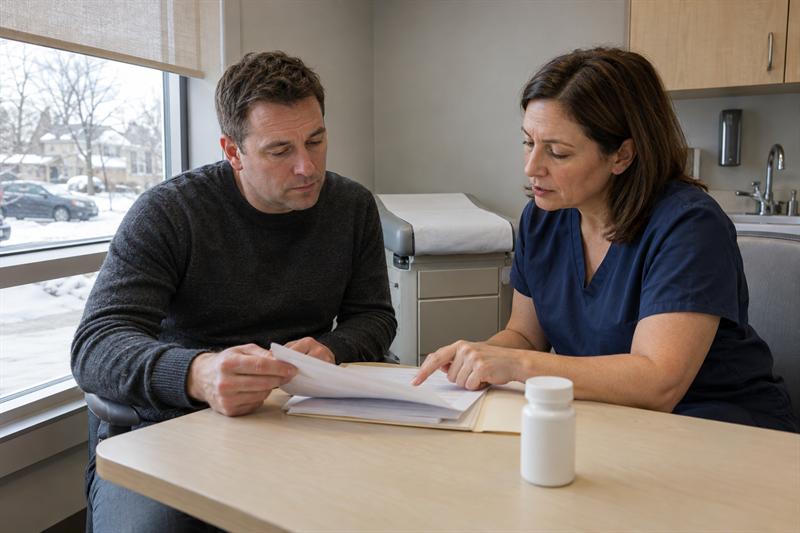
Many people searching for Dr. Roufaida Al-Misky family medicine are not looking for a general explanation of primary care. They are trying to answer a practical question: Is this the right doctor for ongoing care, routine visits, and urgent health concerns that are not emergencies?
That uncertainty often starts with third-party listings. A name, a specialty, and a location do not explain how care works, what the credentials mean, or whether the practice feels like the right fit. At Dr. Roufaida Al-Misky Family Medicine and Wellness, that difference matters because primary care works best when patients understand both the physician and the care model behind the practice.
Who Is Dr. Roufaida Al-Misky?
Dr. Roufaida Al-Misky, MD, FAAFP is a family medicine physician serving patients in Troy, Michigan. For someone choosing a new primary care doctor, that means care is centered on the broad scope of family medicine rather than a single issue or a one-time visit.
This is often the point where patients need more than a directory listing. People may search by name, compare a few profiles, and still feel unsure because the information is thin. A clear physician profile helps connect the doctor’s credentials, role, and practice approach in a way a listing page cannot.
At Dr. Roufaida Al-Misky Family Medicine and Wellness, that role is tied to continuity. The focus is not only on treating a problem in isolation, but also on understanding health history, current concerns, and what ongoing care may look like over time.
Medical background and professional focus
Family medicine is built around comprehensive primary care. That includes preventive care, chronic condition management, routine health concerns, and guidance when new symptoms appear. Instead of narrowing the focus to one body system or one short-term problem, family medicine looks at how health issues connect.
That broad perspective matters in everyday care. A cough, rising blood pressure, fatigue, medication side effects, overdue screenings, and stress are not always separate issues. A family medicine physician is trained to look at the full picture and help determine what needs attention now, what should be monitored, and what may need to be coordinated next.
What FAAFP means
FAAFP is a professional designation within family medicine. For patients, the most important point is not the letters alone, but what they represent: recognized standing within the field of family medicine and a professional identity rooted in comprehensive, ongoing primary care.
- It helps distinguish family medicine as a broad medical specialty, not just a general label.
- It signals professional commitment within the field.
- It matters most when paired with the day-to-day work of continuity, prevention, and long-term patient relationships.
Credentials after a physician’s name are not just formalities. They help patients understand training, specialty focus, and professional role. That clarity matters when choosing who will handle routine care, follow-up, and new concerns over time.
What a Family Medicine Physician Does
A family medicine physician handles far more than annual checkups. Family medicine brings prevention, evaluation, monitoring, follow-up, and care coordination into one ongoing relationship.
This is one of the biggest gaps in directory-style profiles. They list conditions and procedures, but they rarely explain how care works in practice. In day-to-day care, family medicine helps patients address everyday health concerns before those issues turn into rushed, fragmented care.
- Preventive care and wellness planning
- Routine visits for new or changing health concerns
- Chronic condition management
- Immunizations and health maintenance
- Same-day evaluation for urgent, non-emergency needs
- Coordination when labs, referrals, or specialist input are needed
For a broader look at this care model, see family medicine in Troy, MI: personalized primary care for adults and families.
Preventive care and routine primary care
Preventive care is where many long-term health concerns are first identified. Annual visits, screening discussions, routine blood work, immunizations, and follow-up on early concerns can help identify changes before they become harder to manage.
Many patients delay preventive care because nothing feels urgent. That can lead to missed screenings, unmanaged risk factors, and more complicated visits later. Routine primary care is usually most helpful when small changes are reviewed early rather than after they begin affecting daily life.
Preventive care also depends on consistency. A physician who knows the patient’s history may be better positioned to notice when symptoms, lab trends, or health habits begin to shift. That is where continuity becomes practical, not just theoretical.
Chronic condition management
Chronic condition management is not just about refilling medications. It often involves tracking symptoms over time, adjusting follow-up, reviewing how treatment is working, and recognizing when a problem is becoming harder to control.
When care becomes reactive, problems can grow harder to manage. A patient may miss follow-up, symptoms may drift, medications may stop fitting the situation, and each visit can become more about catching up than staying ahead. That can create more disruption, more uncertainty, and more specialist coordination later.
For readers trying to understand how long-term follow-up works, chronic medical care and management in Troy offers a more detailed look at ongoing primary care.
Same-day care for urgent, non-emergency concerns
One practical part of family medicine is access when something needs attention quickly but is not an emergency. Same-day care for urgent, non-emergency concerns can help patients address common issues before they lead to bigger disruptions or unnecessary outside visits.
- New symptoms that need timely evaluation
- Worsening minor illnesses or infections
- Medication-related concerns
- Everyday problems that feel too significant to wait but do not belong in the emergency room
This is where many patients get stuck. They may wait too long, go to urgent care for every issue, or move between disconnected visits. That can lead to fragmented records, repeated explanations, and less continuity. If the question is whether a family doctor can help with time-sensitive everyday concerns, the answer is often yes when the issue is urgent but not emergent.
What Patients in Troy May Be Looking For in a Primary Care Doctor
Most patients are not choosing a doctor based on credentials alone. They are looking for a combination of trust, clarity, access, and continuity. In Troy, that often means finding a physician who can handle routine care, guide next steps when something changes, and make it easier to get timely help without starting over each time.
This is why branded physician searches are usually closer to a decision-stage search. The reader is not casually researching. They are trying to decide whether this doctor and this practice fit the kind of care they actually need.
For a practical framework, how to choose a family doctor in Troy walks through the decision factors that matter most.
Convenience, continuity, and care coordination
Convenience matters, but convenience without continuity can create more work later. One-off visits can solve a short-term problem, but they do not build the larger understanding that helps a physician notice patterns, connect symptoms, and keep care moving in the right direction.
This is a common challenge when patients rely on disconnected care. The same story gets retold at every visit. Follow-up gets delayed. Test results, referrals, and medication changes may stop fitting together. Over time, problems can become harder to manage because no one visit has the full context.
Care coordination matters most when health issues stop being simple. Once labs, referrals, chronic conditions, or mental health concerns enter the picture, continuity often becomes the difference between organized care and repeated gaps.
In-office visits and telemedicine when appropriate
Hybrid care works best when patients understand what each visit format is for. Telemedicine can be a practical option when the issue can be addressed through discussion, history review, follow-up, or care planning. In-office visits are usually the better choice when a physical exam, testing, or direct evaluation is needed.
A common misunderstanding is thinking telemedicine replaces office care. It does not. It expands access when the situation fits. That distinction matters because the wrong visit format can create delay. If an issue needs hands-on evaluation, starting with a virtual visit may slow the next step instead of solving the problem.
If you are noticing these signs, it may be time to re-establish consistent primary care:
- You are using urgent care repeatedly for issues that keep coming back.
- You do not have one doctor tracking medications, follow-up, and preventive care together.
- You are delaying care because scheduling feels difficult or unclear.
- You have a new concern and are unsure whether it should be handled in person or through telemedicine.
When these patterns show up, the issue is no longer just convenience. It often means primary care access and continuity need attention.
What to Expect as a New Patient
The first primary care visit should create clarity. It is the point where health history, current concerns, preventive needs, and follow-up priorities begin to come together. For many patients, this is also where uncertainty drops because the visit is no longer just about one problem. It becomes the start of organized ongoing care.
Some new patients arrive thinking the first appointment is mostly paperwork. In reality, the visit is often more useful than that. It helps establish what needs attention now, what should be monitored, and what the next steps are likely to be.
Readers preparing for that transition can learn more in what to expect at your first primary care appointment.
First appointment goals
A first appointment usually focuses on understanding the patient’s health history, current symptoms or concerns, medications, and preventive care needs. It is also the point where priorities start to become clearer.
This matters because early visits often set the direction for everything that follows. If concerns are not organized well at the start, follow-up may become less efficient and important details may be easier to miss. A strong first visit can create a better map for ongoing care.
Questions to bring and how ongoing care is established
Patients usually get more from the visit when they come prepared with the right information and questions. That preparation makes the appointment more focused and helps the physician understand what deserves immediate attention.
- Bring an up-to-date medication list.
- Bring relevant records if recent care happened elsewhere.
- Bring questions about chronic conditions, new symptoms, or preventive needs.
- Bring concerns about follow-up, referrals, or care coordination if those have been difficult before.
What this leads to is a clearer care plan. Ongoing primary care is easier to build when the first visit identifies what needs follow-up, what can be monitored, and what should be addressed at future appointments instead of left unresolved.
How This Practice Supports Ongoing Family Medicine Care
At Dr. Roufaida Al-Misky Family Medicine and Wellness, ongoing family medicine care is built around personalized primary care, same-day access for urgent non-emergency needs, and a hybrid model that includes in-office care and telemedicine when appropriate.
That matters because primary care can break down when access is inconsistent. When patients cannot get timely answers for changing symptoms, medication concerns, or routine follow-up, small issues may become larger ones. A care model that supports both continuity and access can help keep routine healthcare from turning into reactive healthcare.
Personalized primary medical care
Personalized primary care is not just a general promise. In practice, it means care is shaped by the patient’s history, ongoing concerns, response to prior treatment, and the patterns that develop over time.
This is what makes family medicine more useful than isolated visits. A physician who knows the patient’s baseline may be able to spot changes earlier and make follow-up more precise. That can lead to better organization, fewer repeated explanations, and clearer next steps when something changes.
Access for everyday health needs in Troy
Primary care has to work in real life. That includes routine visits, preventive care, chronic follow-up, and time-sensitive concerns that do not belong in the emergency room. Access is not a side benefit. It is one of the conditions that helps make continuity possible.
This is where many patients decide whether a practice truly fits their needs. If getting seen is too difficult, problems may get postponed. If follow-up is inconsistent, care may become fragmented. Dr. Roufaida Al-Misky Family Medicine and Wellness is built around everyday primary care needs in Troy, including practical access for urgent, non-emergency issues that should not be ignored.
Why a Physician Profile Matters When Choosing a Family Doctor
A physician profile matters because patients are not choosing a directory entry. They are choosing the person who will help interpret symptoms, track changes over time, manage routine and chronic concerns, and decide what needs attention next.
Third-party listings usually stop at surface details. They confirm a name and specialty, but they rarely explain how care works or why continuity matters. This is where a first-party physician profile becomes more useful. It shows the connection between credentials, care model, and day-to-day patient experience.
That distinction often changes the decision. Once patients understand the difference between one-time access and ongoing primary care, they are in a better position to choose a physician who fits their actual needs instead of relying on incomplete profile data.
Key Takeaways
- Dr. Roufaida Al-Misky, MD, FAAFP is a family medicine physician serving Troy, Michigan.
- FAAFP helps clarify professional standing within family medicine, but the letters matter most when understood in the context of ongoing primary care.
- Family medicine supports preventive care, chronic condition management, routine visits, and urgent non-emergency concerns.
- Same-day scheduling and hybrid in-office and telemedicine care can help reduce delays that commonly disrupt primary care.
- Continuity helps turn scattered visits into more organized healthcare over time.
Conclusion
The real problem is not just finding a doctor’s name online. It is trying to make an important healthcare decision from incomplete information. When that happens, patients may delay care, rely on fragmented visits, or miss the continuity that helps smaller issues get managed earlier.
That is why a clear physician profile matters. Dr. Roufaida Al-Misky Family Medicine and Wellness offers a practical primary care model built around continuity, same-day help for urgent non-emergency concerns, and access through in-office and telemedicine visits when appropriate. For patients looking for organized ongoing care in Troy, this offers a practical next step.
If the goal is to establish reliable primary care instead of piecing care together visit by visit, Dr. Roufaida Al-Misky Family Medicine and Wellness may be a strong next step. Patients who want to understand the first-visit process can start with what to expect at your first primary care appointment and then move toward scheduling care.
FAQ
What does FAAFP mean for a family medicine physician?
FAAFP is a professional designation within family medicine. For patients, the most useful takeaway is that it reflects recognized standing within the field and helps clarify that family medicine is a defined medical specialty, not just a general label.
What often gets misunderstood is that people see a string of letters after a doctor’s name and assume all credentials mean the same thing. They do not. MD identifies the medical degree, while FAAFP adds context about professional identity within family medicine. The implication is not a guaranteed outcome. It is a clearer understanding of the physician’s specialty foundation and role in comprehensive primary care.
What kinds of health concerns can a family medicine doctor help with?
A family medicine doctor helps with preventive care, routine health concerns, chronic condition management, immunizations, and many urgent but non-emergency problems. That broad scope is one of the defining strengths of primary care.
The useful distinction is that family medicine is not limited to annual exams. It also includes follow-up after new symptoms appear, medication review, monitoring changes over time, and coordinating next steps when a problem becomes more complex. This is why one physician relationship can cover a wide range of everyday healthcare needs instead of pushing each issue into a separate setting.
How is a family medicine physician different from going to urgent care for every issue?
The main difference is continuity. Urgent care is built for isolated short-term issues, while family medicine is built to connect current symptoms with medical history, medications, preventive care, and follow-up over time.
A common pattern is that patients use urgent care repeatedly for problems that keep coming back. That can result in fragmented records, repeated explanations, and less coordination. A family medicine physician is often better positioned to see the larger pattern, decide what needs monitoring, and keep care organized after the initial visit is over. That difference matters most when issues stop being one-time problems.
When might telemedicine be appropriate for primary care?
Telemedicine is usually appropriate when the concern can be addressed through conversation, history review, follow-up, or planning rather than a hands-on exam. It works best as part of an established primary care relationship, not as a replacement for all office-based care.
The key distinction is visit fit. Some issues can move forward well in a virtual format, while others need in-person evaluation because the next step depends on physical findings or testing. What changes the decision is not convenience alone. It is whether the problem can be evaluated accurately without an in-office exam.
What should a new patient bring to a first primary care appointment?
A new patient should usually bring an up-to-date medication list, relevant medical records if recent care happened elsewhere, and a clear list of current concerns or questions. That information makes the first visit more useful and more efficient.
The reason this matters is that the first appointment helps establish the structure for ongoing care. If medications are unclear, records are missing, or major concerns are not organized, the visit becomes less focused and follow-up may get harder. Better preparation can lead to a clearer care plan and stronger continuity from the start.
How do patients choose the right family doctor in Troy?
Most patients choose the right family doctor by looking at three things together: trust, fit, and access. Credentials matter, but so does whether the physician can provide continuity, handle routine and urgent non-emergency concerns, and make follow-up easier over time.
What commonly gets misunderstood is that a strong directory listing does not answer those questions well. The more useful comparison is whether the physician’s role, care model, and access approach match the patient’s actual needs. In Troy, that often means looking beyond name recognition and asking whether the practice can support both everyday care and timely next steps when something changes.
Recent Comments