

Why People Look for a New Patient Family Doctor in Troy
People in Troy often start searching for a new patient family doctor when routine care and unexpected symptoms no longer fit their existing care setup. Insurance changes, relocation, shifts in work or school schedules, or a first stretch of recurring minor illness can push the decision forward. Some are ready for a primary care relationship after relying on walk-in urgent care for too long, and they want a provider who tracks the full picture.
The decision is about matching a care model to the household. A primary care home that handles prevention, medication review, referrals, and same-day non-emergency visits can give the family one point of contact instead of a rotation of one-time visits.
When a Primary Care Provider Becomes Essential
A primary care provider becomes essential when the household needs a steady point of contact for both minor symptoms and long-term health planning. The provider keeps the medical record current, coordinates referrals, and reviews the medication list before a new medication is added. This is why talking with your primary care doctor regularly can matter more than a single acute visit.
- Preventive screenings
- Immunization tracking
- Chronic condition management
- Medication reconciliation
- Referrals when specialist care is needed
- Coordination across providers
The gap often appears when urgent care treats each issue as a single visit. Blood work may be left to follow up later, a medication dose may need adjustment, and a recurring symptom may not receive a structured plan. Without a primary care provider holding the record, each new visit begins from scratch, and small issues that need a six-week plan can become more urgent than they needed to be.
Family Medicine vs. Urgent Care: Understanding the Difference
Family medicine is ongoing primary care covering prevention, chronic condition management, acute non-emergency visits, and referrals. Urgent care is usually short-term walk-in treatment for a specific acute issue. Emergency services handle immediate, severe, or life-threatening concerns.
The practical difference is continuity. A family medicine provider tracks patterns over months and years. Urgent care addresses the issue in front of it. If the same sore throat, urinary symptoms, or medication question shows up at urgent care more than once, the family’s care model may be missing the thread that connects those visits into one management plan.
Call emergency services for chest pain, trouble breathing, one-sided weakness, severe injury, uncontrolled bleeding, or rapidly worsening symptoms. Those concerns need emergency care, not a same-day office visit. Drawing that line keeps mild problems from being over-treated and serious problems from being under-treated.
How an Appointment-Based First Visit Works
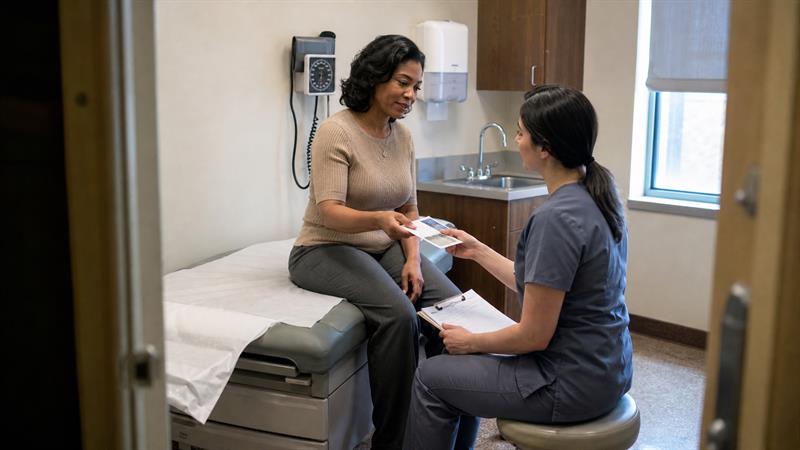
An appointment-based first visit gives the patient a set time and a structured path through intake, exam, and planning. The visit is scheduled rather than placed at the back of a walk-in line, so the provider has time to build the initial picture. The patient also walks in knowing what to expect and what to bring, which can reduce the uncertainty that keeps people from booking the first appointment.
What “Appointment-Only” Means for New Patients
Appointment-only means the patient books a specific time for the first visit. The office prepares intake paperwork for that window. The patient arrives, checks in, and the visit follows a defined sequence rather than an open waiting-room queue. That creates predictability around work, school pickup, and day planning.
Appointment-based scheduling does not lock a patient out when something changes suddenly. Same-day scheduling is built into the model for certain urgent non-emergency concerns, so a sore throat on a Tuesday or a minor sprain before a weekend trip can often be addressed without waiting for next week’s routine slot.
Same-Day Scheduling for Urgent, Non-Emergency Needs
Same-day scheduling fills the gap between booking a routine appointment weeks out and going to the emergency room. It works for acute, non-emergency problems that need a clinical evaluation today but do not require trauma care or stabilization. Availability follows the practice’s daily schedule, and the office confirms the slot when the patient calls.
- Mild fever with a runny nose and fatigue
- Sore throat without difficulty breathing or swallowing
- Urinary symptoms without fever or back pain
- Minor soft tissue injury that does not require imaging or surgery
Call emergency services for chest pain, trouble breathing, stroke signs, severe injury, uncontrolled bleeding, or symptoms that are rapidly worsening. Same-day scheduling covers the urgent non-emergency layer. Keeping that boundary clear helps patients get the right level of care quickly.
First Visit vs. Routine Follow-Up: Key Differences
A first visit is the baseline appointment. It covers identity and insurance verification, health history intake, medication and supplement reconciliation, a review of current concerns, a baseline exam when appropriate, and a plan for what happens next. A routine follow-up is narrower: it checks on a specific treatment response, reviews lab results, adjusts a medication, or tracks a chronic condition between visits.
- First visit: intake, full history, medications, current symptoms, baseline plan, preventive discussion
- Follow-up: treatment response, lab review, medication adjustment, condition maintenance
Skipping the baseline visit and only showing up after symptoms get complex leaves the provider without a reference point. A cough that started six weeks ago looks different when the provider knows it began as a cold, worsened after a flight, and has already been treated with antibiotics. The first primary care appointment creates that reference point, and every later visit can be measured against it.
What to Bring and Prepare Before Your First Appointment
Preparation before the first visit is not about making a presentation. It is about giving the provider enough accurate information to move quickly to the concerns that need attention. Ten minutes spent listing medications and symptoms before the visit often does more for the quality of the appointment than trying to remember everything in the exam room.
The New Patient Preparation Checklist
The list below covers the items that can make the first conversation move faster and help make the medical record more accurate from the first entry. Bring what the household has. If a record is missing, the office can work with what is available.
- Photo identification
- Current insurance card
- Secondary insurance information if the household carries more than one plan
- Current medication list: prescriptions, over-the-counter drugs, supplements, vitamins
- Known allergies, including medication and non-medication allergies
- Short list of current symptoms with rough start dates
- Recent test results, imaging reports, or hospital discharge summaries if they exist
- Emergency contact name and phone number
- Two or three specific questions the patient wants answered during the visit
- Family health history details that feel relevant, such as parent or sibling diagnoses
Why Preparation Improves the First Conversation
A medication list helps the provider identify potential duplicates or interactions before adding new medication. A symptom timeline can distinguish a new issue from a recurring pattern, help prioritize what needs evaluation, and point the visit toward the most useful next step: treatment, observation, lab work, a specialist referral, or a follow-up plan.
When the incoming record is complete, the provider can spend less time filling in blanks and more time addressing the concerns that matter most. That is why the items in the checklist are not formalities. They are the starting point for a clear first-visit plan. For families looking for a new patient family doctor in Troy, this level of preparation helps turn the first appointment into a practical starting point, not another one-time triage visit.
Recent Comments