

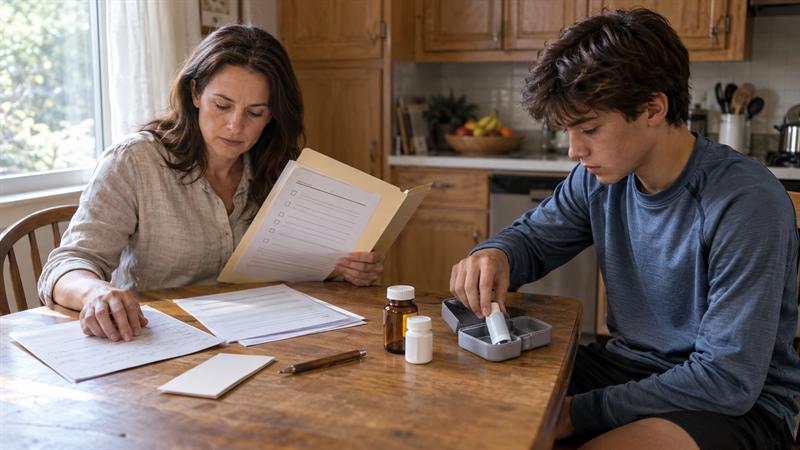
At Dr. Roufaida Al-Misky Family Medicine and Wellness, a common issue is that the appointment is booked, but the form is incomplete, the injury history is unclear, or the teen mentions exercise symptoms only after the visit has started. That is when delays usually begin. A physical tends to go more smoothly when families understand what the visit is for and what information matters most.
If you are trying to sort out whether your teen needs a sports physical, a school physical, or something more complete, the answer usually depends on why the visit is needed and whether there are broader health concerns to address at the same time. The sections below explain how to prepare and what to bring up during the visit.
Does Your Teen Need a Sports Physical, a School Physical, or an Annual Checkup?
These visits can overlap, but they are not the same. That confusion leads many families to expect one appointment to cover everything, then realize too late that the visit they scheduled was narrower than they expected.
A sports physical is generally focused on whether a teen is ready for athletic participation. A school physical is usually tied to school requirements and a general health review. An annual checkup is broader and gives more space to talk about growth, sleep, stress, chronic conditions, nutrition, menstrual concerns, or mental health questions that go beyond a form.
If a teen has ongoing symptoms or is overdue for preventive care, a broader visit is often more useful than a quick form-based exam. For a broader look at preventive care, see annual health exams and preventive screenings in Troy.
What a sports physical is meant to review
A sports physical is a pre-participation screening. It generally reviews medical history, past injuries, symptoms with exercise, medications, allergies, and basic physical findings that could affect sports participation.
Families sometimes focus on how the teen feels today, while the more useful information may come from what happened before. Prior concussions, repeated sprains, dizziness with exercise, chest symptoms, or breathing problems can all shape the visit. That is one reason sports physicals matter for children and teens, even when there is no obvious current problem.
What a school physical may include
A school physical usually reviews overall health in relation to school requirements. That can include vision, hearing, growth, immunization review, and general medical history, depending on what the school asks for.
The important distinction is that school requirements and sports clearance are not always the same. If your teen plans to participate in athletics, a school form does not always address the same issues as a sports participation form.
When an annual checkup may be the better visit
An annual checkup is often the better option when a teen is due for routine care or has concerns that need more than a quick review. That may include sleep problems, low energy, stress, anxiety, recurring headaches, nutrition concerns, menstrual symptoms, or chronic condition follow-up.
Sometimes a required physical becomes the moment a parent finally brings up months of fatigue, repeated pain, or emotional changes. At that point, the visit is no longer only about paperwork. It is also about getting a clearer picture of the teen’s health. Families thinking through that difference can also review why annual physical exams matter.
What to Bring to Your Teen’s Physical
Incomplete preparation is one of the most common reasons these visits slow down. The exam itself is often straightforward. Delays usually come from missing forms, missing history, or missing details about medications, injuries, or symptoms.
The more complete the information, the easier it is to make informed decisions during the visit.
Forms and school or sports paperwork
Bring every form the school, team, or league requires. Do not assume one form works for every activity. Some organizations use their own paperwork, and that may not become clear until the family arrives.
- School physical forms
- Sports participation forms
- League or activity paperwork
- Any sections already completed by the parent or guardian
If forms are missing or partly filled out, the visit may shift from completion to clarification. That can lead to extra follow-up instead of leaving with a finished form.
Medication list, inhalers, and supplements
Bring a current list of everything the teen takes. That includes prescriptions, over-the-counter medicines, inhalers, allergy medicines, supplements, vitamins, protein powders, and energy products.
This gets missed more often than many families expect. A teen may say they are “not on anything,” then later mention an inhaler used at practice, a supplement started for training, or a medicine taken only when symptoms flare. Those details can change the visit because they help explain symptoms, performance concerns, or questions about safe participation.
Immunization records and medical history
If the school requires immunization documentation, bring it. It also helps to bring any medical history that explains the teen’s overall health and any condition that could affect school or sports participation.
- Past medical conditions
- Asthma or allergy history
- Surgeries or hospitalizations
- Relevant family history, especially related to exercise symptoms or heart concerns
If you are unsure what records matter, think about what could affect activity, symptoms, or follow-up. That is usually the information that becomes important during the visit.
Injury history, glasses or contacts, and specialist information
Bring details about prior fractures, sprains, joint problems, concussions, or pain that keeps coming back. If a teen uses glasses or contacts for school or sports, that should also be clear. Specialist names, instructions, or previous recommendations can also be helpful when a condition is already being followed.
This is one place where vague history causes trouble. Saying “there was a knee injury last year” may not be enough if the teen still has pain, never fully returned to activity, or stopped treatment early. The more specific the history, the easier it is to understand what still needs attention.
Questions Parents Should Ask During the Visit
The most useful visits are not built around one question: “Can the form be signed?” They are built around the questions that help clarify whether the teen is ready to participate, whether symptoms are being managed well, and whether a problem has been quietly getting worse.
If something has been recurring, affecting performance, or changing how the teen functions day to day, it should be discussed clearly during the visit.
Questions about sports participation and past injuries
Parents should ask direct questions when there has been a recent or past injury. That includes whether the teen is truly back to normal, whether pain that comes and goes still matters, and whether a concussion history changes what to watch for now.
- Is this old injury fully resolved, or is it still affecting performance?
- If pain returns during activity, what should we pay attention to?
- Does this concussion history change what to watch for now?
If pain keeps returning with training, it may mean the issue is not fully behind them. When that gets ignored, repeated setbacks are more likely.
Questions about growth, nutrition, sleep, and recovery
These questions matter more than many families expect. Sleep problems, poor recovery, skipped meals, low energy, or a packed schedule often show up first in performance, concentration, mood, or recurring minor injuries.
- Is growth tracking as expected?
- Could sleep habits be affecting sports or school performance?
- Are there signs the teen is not recovering well between activities?
A common misunderstanding is treating these issues as separate from health care. In practice, they are often part of the bigger picture.
Questions about asthma, headaches, dizziness, or fainting
Symptoms during or after exercise deserve clear attention. Shortness of breath, dizziness, fainting, chest symptoms, or headaches that intensify with activity can change what needs to happen next.
- What symptoms during exercise need closer attention?
- Does the teen need a medication review or updated action plan?
- What concerns would affect sports participation right now?
If these symptoms are showing up with exertion, the focus should not be on pushing through them. The more useful question is what the pattern suggests and whether more evaluation is needed before activity continues.
Questions about emotional health and adolescent changes
Teens do not always bring up stress, mood changes, social pressure, sleep problems, or changes in motivation unless someone asks directly. Parents can use the visit to raise concerns when behavior, school performance, mood, or daily functioning has shifted.
These concerns are not separate from physical health. They often connect to sleep, appetite, focus, energy, and school performance. Families who want a better sense of how primary care can help with these conversations can read what to expect when you ask your primary care doctor for mental health help.
If any of these sound familiar, it may help to treat the visit as more than a form appointment:
- Your teen gets dizzy, short of breath, or develops headaches with exercise
- An old injury keeps returning during practice or training
- Sleep, stress, mood, or energy has changed over the last few months
- You are unsure whether a sports physical is enough for what is going on
When those signs are present, a more complete evaluation is often more useful than a quick signature.
Questions Teens Should Be Encouraged to Ask
Teens often leave important questions unasked because they assume the visit is only about forms. That can delay attention to a problem until it starts affecting school, sports, or daily life more clearly.
Encouraging teens to speak up usually makes the visit more accurate and more useful.
Performance, energy, and conditioning concerns
Teens should ask about getting tired too quickly, shortness of breath during activity, pain that keeps returning, or performance changes they cannot explain. These concerns are easy to brush aside, but they can point to something that needs a closer look.
If a teen says, “I get winded faster than everyone else,” that still matters. The pattern, how long it has been happening, and whether it is getting worse all help shape what the concern may mean.
Periods, acne, sleep, stress, or mood changes
These are common teen concerns, and they affect more than comfort. They can affect concentration, confidence, school functioning, energy, and sports participation.
Many teens assume these topics are too minor or too personal to bring up during a physical. In reality, they are often the issues that become more disruptive when they stay unaddressed.
Privacy and confidential health discussions
Some questions are easier for teens to ask directly. A physical can be a useful setting for a private discussion when the concern involves stress, mood, body changes, school pressure, or other sensitive health topics.
This matters because teens may be more likely to share accurate information when they know the visit is not only about paperwork. That can lead to a clearer picture of what is actually going on.
What Usually Happens During a Teen Sports or School Physical
Knowing what usually happens during the visit can lower stress and help families prepare with the right information. The visit is often straightforward, but the quality of the information shared affects how useful it becomes.
Medical history review
The visit often starts with a medical history review. That includes current symptoms, prior injuries, allergies, medications, chronic conditions, and anything that happens during exercise that seems unusual or keeps coming back.
This is one of the most important parts of the appointment because a normal basic exam does not erase a significant history. If the history raises questions, that usually shapes what needs to happen next.
Vitals, vision, and general exam
The exam commonly includes:
- Blood pressure
- Heart rate
- Height and weight
- Vision screening when applicable
- General review of major body systems
These findings help build the overall picture, but they are only part of it. Families sometimes expect a normal quick check to settle everything, when the decision also depends on the teen’s history.
Movement, joints, posture, and strength screening
A sports or school physical may also include basic movement and musculoskeletal screening. That can help identify issues with joints, posture, flexibility, or strength that affect participation or point back to an unresolved injury.
If prior pain, instability, or repeated sprains are not mentioned, this part of the visit can miss the pattern that matters most. That can lead to the same problem showing up again once activity increases.
Reasons a Form May Not Be Signed Right Away
This is one of the questions families care about most, and the answer is usually straightforward: something important still needs to be clarified. An unsigned form does not automatically point to a serious problem, but it does mean the information is not complete enough yet or a concern needs more review.
Missing paperwork or incomplete history
If forms are incomplete, the medication list is unclear, or key history is missing, the visit may not end with a finished document. This is one of the most preventable reasons a physical gets delayed.
What causes the delay is not just the missing signature. It is that the missing detail may turn out to be central to the decision.
Symptoms that may need more evaluation
Exercise-related chest symptoms, fainting, significant dizziness, breathing problems, or severe unresolved headaches need closer attention. These symptoms should not be treated like routine discomforts, especially when they are becoming more noticeable or more frequent.
When these issues come up, further evaluation may be needed before clearance decisions move forward.
Recent injury or unresolved medical concerns
Recent fractures, joint instability, concussion recovery, or persistent pain can all slow down form completion. The issue is not just whether the teen wants to return. The issue is whether the return fits how the injury has healed and how the teen is functioning now.
This is where coordinated primary care can be especially helpful. If the physical leads to more follow-up, it helps to understand what happens after a primary care visit when follow-up is needed.
Tips for Scheduling Before Deadlines in Troy
The most practical move is to schedule before the last rush. Waiting until the final week creates pressure, and that pressure can make it harder to gather records, ask the right questions, or leave time for anything unexpected.
If a concern comes up during the visit, a tight deadline quickly becomes the bigger problem. Scheduling earlier leaves room for form corrections, follow-up, and any added evaluation that may be needed before participation begins. Families looking for office logistics can review the Troy family medicine office FAQ about appointments, records, and patient questions.
Key Takeaways
- Bring all required school or sports forms, not just what you think the office will need.
- Bring a complete medication list, including inhalers, supplements, and as-needed items.
- Be ready to discuss past injuries, concussion history, asthma, exercise symptoms, and relevant family history.
- Use the visit to ask about pain, sleep, stress, mood, recovery, and anything affecting daily function or sports participation.
- Do not assume a sports physical replaces a full annual checkup when broader concerns are present.
- Schedule early enough to leave room for follow-up if something needs more review.
When to Schedule a Teen Physical
If your teen needs a sports or school physical in Troy, it usually helps to schedule before deadline pressure takes over. Once the form feels urgent, families are more likely to miss details, overlook symptoms, or treat a broader health concern like a paperwork issue.
At Dr. Roufaida Al-Misky Family Medicine and Wellness, the goal is not only to complete a form. It is to make sure the visit reflects what is really going on, whether that means a straightforward physical, a broader preventive discussion, or follow-up for a concern that should not be pushed aside.
Conclusion
The real problem with teen sports and school physicals is not the form itself. It is what gets missed when families rush in without the records, injury history, symptom details, or questions that help guide the visit. When that happens, forms can be delayed, old issues can resurface, and important concerns can stay hidden until they affect school, sports, or daily life more clearly.
That is why Dr. Roufaida Al-Misky Family Medicine and Wellness can be a practical next step. When a teen physical needs to be more than a signature, a family medicine approach can help connect the form, the symptoms, the history, and any follow-up that may be needed. If your family is trying to sort out the right kind of visit or move forward without last-minute confusion, Dr. Roufaida Al-Misky Family Medicine and Wellness offers a clear place to start.
Our Approach at Dr. Roufaida Al-Misky Family Medicine and Wellness
At Dr. Roufaida Al-Misky Family Medicine and Wellness, teen physicals are approached as decision points, not just checklist visits. That matters because the same appointment that starts as school or sports paperwork can also bring up a pattern that has been building for months, such as recurring pain, low energy, exercise symptoms, or stress that is affecting daily life.
This is where family medicine can be especially useful. If a concern needs follow-up, coordination, or a broader preventive discussion, the next step does not have to start from zero with a different provider who does not know the background.
FAQ
Can a sports physical replace my teen’s annual checkup?
Not always. A sports physical is usually focused on whether a teen is ready for athletic participation, while an annual checkup is broader and covers preventive care issues that do not fit neatly into a form visit. That difference matters when a teen is overdue for routine care or has concerns like poor sleep, low energy, stress, menstrual symptoms, or chronic condition follow-up. The common misunderstanding is thinking any physical covers everything. It usually does not.
What should parents bring to a teen sports or school physical?
Bring the required forms, a current medication list, inhalers or other routine supplies if relevant, immunization records if needed, and clear details about past injuries or medical conditions. The most important distinction is between showing up with paperwork and showing up prepared. A completed form is useful, but it does not replace the history that explains asthma symptoms, concussion recovery, recurring pain, or exercise-related dizziness.
What if my teen had a concussion, asthma, or a past injury?
That history should be discussed clearly, even if the teen seems fine now. What matters is whether symptoms are fully gone, whether activity still triggers problems, and whether the teen returned to normal function or simply pushed through. A prior concussion with ongoing headaches is very different from a concussion that fully resolved. The same is true for asthma. A listed inhaler matters less than understanding how often symptoms happen during exercise and whether they are getting harder to control.
What questions should teens ask during a physical?
Teens should ask about anything that is affecting school, sports, or daily life, especially low energy, shortness of breath with exercise, recurring pain, sleep problems, stress, mood changes, or menstrual concerns. The useful distinction is that these issues are not separate from the physical. They are often the reason a simple form visit turns into a more meaningful conversation. A quiet visit does not always mean there are no concerns. It may simply mean the teen was unsure what they were allowed to ask.
How early should a teen sports physical be scheduled before school or tryouts?
Schedule early enough to leave room for records, forms, and any follow-up that comes out of the visit. The main issue is not just appointment availability. It is that missing history, old injuries, or symptoms during exercise can slow down form completion. When families wait until the final days, they lose the time needed to sort out those details without extra stress.
What happens if a form cannot be completed at the visit?
It usually means something still needs to be clarified. Sometimes that is administrative, such as missing paperwork or incomplete history. Other times it is related to unresolved symptoms, a recent injury, or exercise-related concerns that need more review first. The important point is that an unsigned form usually reflects a reason the decision could not be made with the information available.
Recent Comments