

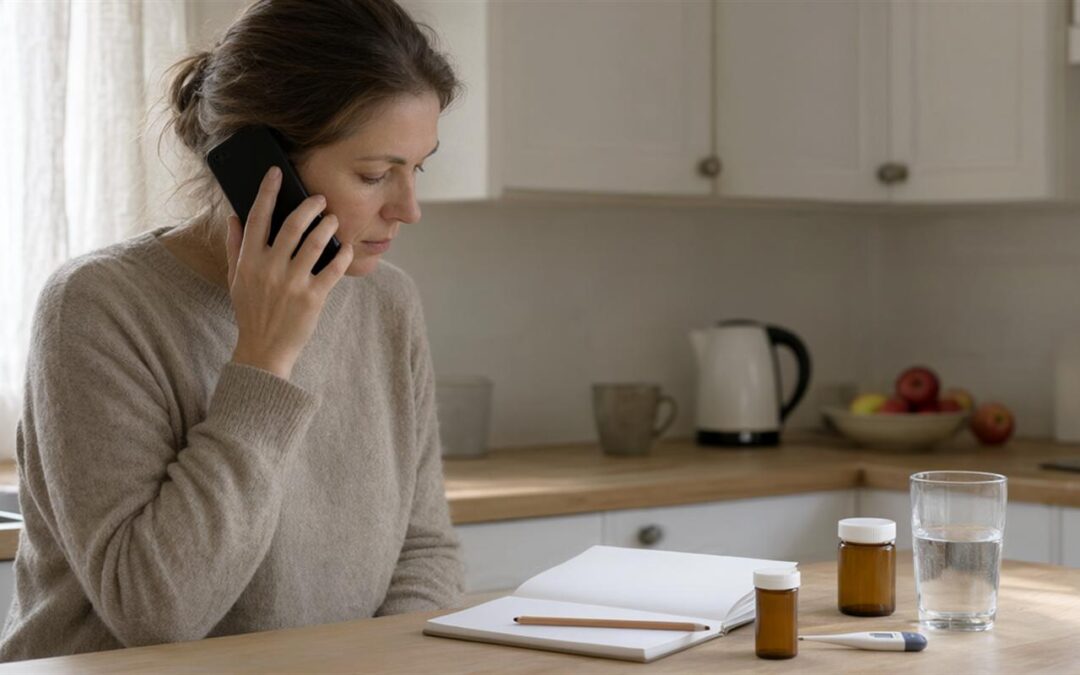
A same-day visit is a scheduled appointment that happens on the day you call. It is not a walk-in slot, and it is not emergency care. Dr. Roufaida Al-Misky Family Medicine and Wellness in Troy keeps same-day scheduling for urgent, non-emergency concerns, and whether a request fits depends on the clinical need and the day’s schedule.
Searching for “same day family doctor Troy” tends to happen at a specific moment. A sore throat has lasted four days. A sprain from a weekend run is not settling. A rash is spreading. At that point the question is not whether any door is open. It is whether the office that holds your records can see you before the problem becomes harder to sort out. The steps between the call and the visit are worth knowing in advance.
What “Same-Day, Non-Emergency” Means at an Appointment-Only Practice
Appointment-only means every visit is scheduled. The office does not take walk-ins, so arriving without a time does not create an opening. Same-day means the office may add you to that day’s schedule when the concern fits the clinical need and the schedule allows. It is not a reserved slot sitting empty, and it is not an unlimited queue.
Non-emergency is the other half of the phrase, and it carries real weight. Chest pain, severe trouble breathing, signs of a stroke, or a deep wound belong in emergency care. For those, call 911 or go to the nearest emergency room. A same-day request to the office is designed for the layer below that threshold.
Appointment-based scheduling is often read as slower access. In practice it lets the office match the concern to a visit type, and some visits may be handled by telemedicine, with the format settled when the appointment is booked. The planning details, including office hours and how appointments are arranged, sit together in the office FAQ on hours and appointments.
If the concern started today and is not settling, call the office rather than waiting for the next routine opening.
Which Concerns Fit a Same-Day Request
Searches for “same day primary care non emergency Troy” describe care that sits between a routine appointment and emergency medicine: problems that should be looked at soon, by someone who can review the history behind them. The practice provides acute medical care for a defined set of concerns.
- Upper respiratory infections and pharyngitis
- Urinary tract infections
- Low back pain and acute sprains
- Cough, rash, headache, and allergies
- Conjunctivitis
- Minor gynecologic issues
What does not fit the same-day layer is just as useful to know. An annual health exam is a wellness visit, usually covered by insurance. Acute problems, chronic care management, and medication changes are billed differently and need their own appointments. A wellness exam booked for next month will not answer a symptom that appeared this morning, and a same-day sick visit will not replace the exam.
Timing is part of the assessment. A symptom that changed quickly, is getting worse, or has not responded to the usual measures is a reason to ask about a slot today. A stable issue present for months is usually better served by a scheduled visit with time for review. The office makes the final call on fit, and that answer comes on the phone.
How to Request a Same-Day Visit
The request is a phone call, and what you say in the first minute shapes the answer. The office number is (248) 759-0993. Most mornings begin at 9 a.m., Wednesday at 10 a.m., Friday closes at 1 p.m., Saturday is available upon request, and the office is closed Sunday.
- Say what you need. State that you are asking about a same-day visit, and whether you are an established or a new patient.
- Describe the change. Give the first day of symptoms, what has shifted since, and anything you have already tried.
- List the medications you take and any ongoing conditions under management.
- Say how you are functioning, not only how you feel: missed work, poor sleep, difficulty with stairs or swallowing.
- Ask about the format, in-office or telemedicine, and what time to arrive.
The staff listens for the details that separate a concern needing a same-day slot from one needing a different visit type. When the concern fits, they add you to the schedule where appropriate. When it does not, they say so on the call, which is easier to work with than discovering it at the door.
A request made while the office is closed is answered when it reopens, and some of that day’s openings may already be taken. The earlier call leaves more of the schedule to work with.
What to Have Ready Before the Call
Preparation shortens the call, and a shorter call reaches a decision faster.
The basics. A photo ID, a current insurance card, your current address and phone number, and a list of the medications you take, or the bottles themselves, cover what the office needs to register you and prepare for the visit.
The symptom story. Note the first day, the pattern across the day, what makes it better or worse, and any reading taken at home, such as a temperature. A short written timeline is easier to read aloud than a memory assembled under pressure.
The status of your care. A first visit often calls for intake details and records from a doctor seen previously. Saying so at the start keeps a same-day request from stalling on paperwork.
The billing question. If the visit type is unclear, ask how it will be billed. An acute problem visit is billed differently from an annual wellness visit, and knowing that before you arrive avoids a surprise later.
What Happens During the Visit
The visit opens with the history: what changed, when it started, and what has been tried. The provider then examines what the concern requires and decides whether testing, a prescription, or a watch-and-wait plan is the right next step. Some problems are settled in one visit. Others need a test result before the answer is clear.
Length varies with the visit. A new patient appointment is typically 60 minutes. An established patient visit is often shorter, in the 15 to 45 minute range. A same-day visit is not a shortened version of either; it is a scheduled visit placed on the same day.
The visit closes with a plan you should be able to repeat back: what to take, what to watch for, what has been ordered, and when to return. If a step is unfinished at the end, ask who handles it and when to expect an update. An order placed and a result received are two different events.
When the Day’s Schedule Is Full
A full schedule is a normal outcome, not a refusal. When there is no room, the office says so and points to the next available appointment. For a concern that cannot wait, urgent care is the usual alternative for non-emergency problems outside office hours, and the emergency department remains the setting for anything severe.
Choosing between those settings is easier with a clear picture of what each one handles. Comparing a family doctor, urgent care, and the ER is the question to settle before driving anywhere, and it is worth settling before the situation is urgent.
Because there is no walk-in flow, a request that does not fit the day becomes a booking question rather than a reason to drive over. A call that starts the process is faster than a drive that ends at a closed schedule.
Billing and Follow-Up After a Same-Day Visit
Annual visits are wellness visits and are usually covered by insurance. An acute problem visit for a same-day concern is billed differently, and the same holds for chronic care management and medication changes. Most insurance plans are accepted. Co-payments are due at the time of the visit, and patients are responsible for deductibles, co-payments, and co-insurance.
Follow-up is where a same-day visit either closes cleanly or leaves loose ends. Labs and referrals ordered during the visit are separate steps, and neither is finished the moment it is ordered. Knowing who schedules the next piece, and what result would change the plan, keeps the concern from turning into a second unanswered request.
What happens after a primary care visit covers that handoff in detail, including the difference between a test order and a result in hand.
If symptoms worsen before a scheduled follow-up, call before the date rather than after it.
Key Takeaways
Same-day requests cover urgent, non-emergency concerns, and the answer turns on the clinical picture and the day’s open slots.
- The practice is appointment-only. There are no walk-ins.
- Call (248) 759-0993 to ask about a same-day visit.
- Describe the symptom timeline, medications, and ongoing conditions on the call.
- Bring a photo ID, an insurance card, and a medication list.
- For a medical emergency, call 911 or go to the nearest emergency room.
The details do more for the request than the wording: when the symptom started, how it has changed, and what has already been tried.
Same-Day Access Starts With One Phone Call
Dr. Roufaida Al-Misky Family Medicine and Wellness provides annual health exams and preventive screenings, acute medical care, chronic medical care and management, women’s health, mental health treatment, minor medical issues, minor skin procedures, immunizations, and wellness injections within one family medicine practice in Troy.
Same-day scheduling belongs to the acute layer of that list, for concerns that should be seen soon but not in an emergency setting. The request begins with a call to the office at (248) 759-0993, or through the office contact page. The answer may be a time today, a time tomorrow, or a different setting entirely, and all three are useful answers.
Anything that feels like an emergency is a 911 call or a trip to the nearest emergency department, not a scheduling question.
Recent Comments